

Laser Face and Head Protection
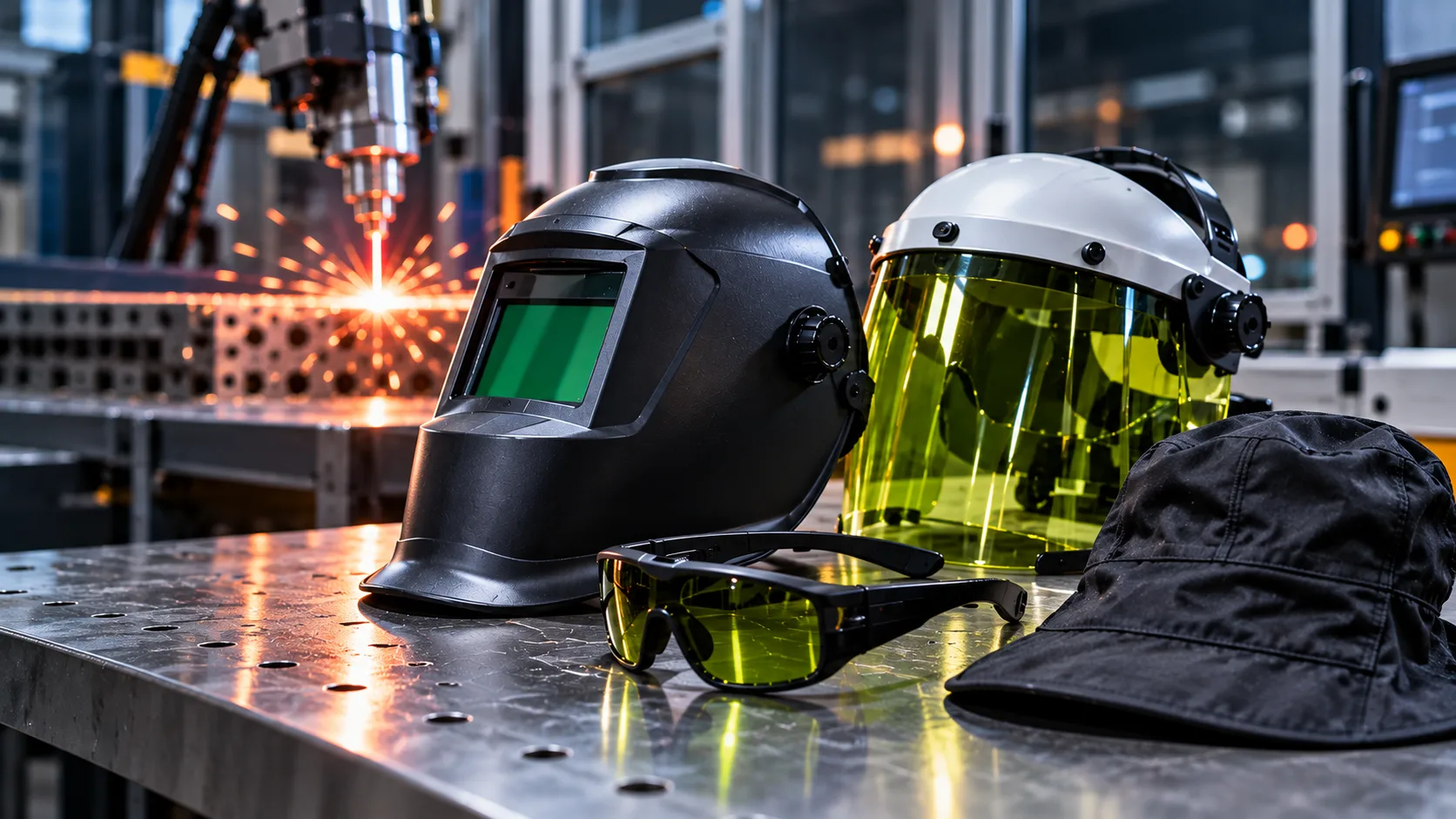
Some laser processes require more extensive personal protective equipment than conventional laser safety eyewear. Welding helmets, face shields and other forms of head protection can provide greater coverage while also helping protect against other process-related hazards.
The appropriate solution depends on the laser process, the characteristics of the laser and the risk assessment for the workplace.
When is face and head protection required?
Laser safety eyewear primarily protects the eyes. In some working situations, larger areas of the face or head may also require protection.
This may be relevant during:
- handheld laser welding
- servicing and adjustment of open laser systems
- work close to the laser process
- processes where reflected or scattered laser radiation may occur
- work where light, heat, sparks or particles also need to be considered.
Protection should always be selected according to the actual process and its risk assessment.
Welding helmets for laser applications
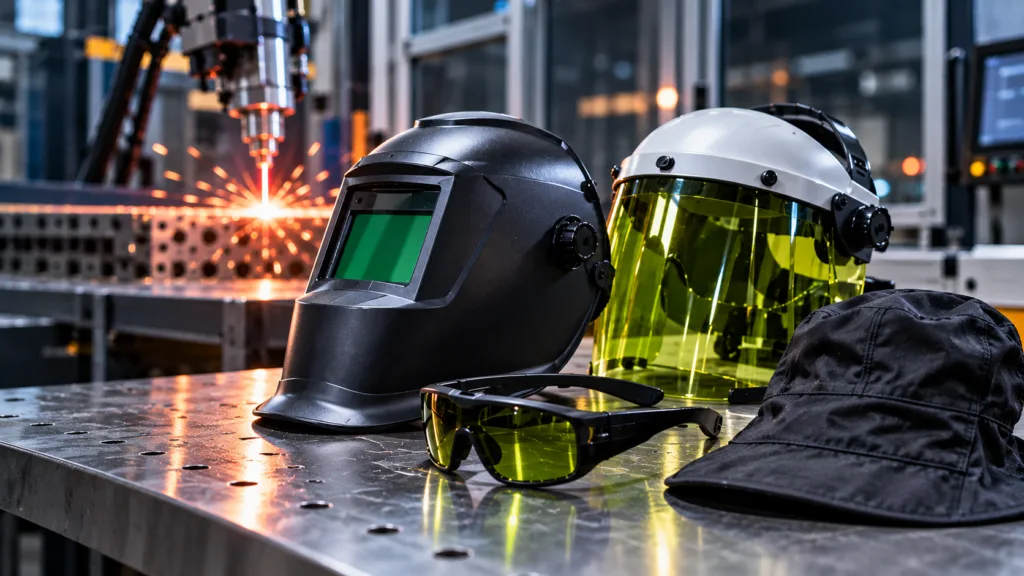
During laser welding, a suitable welding helmet can provide more extensive coverage than conventional safety eyewear.
A helmet can combine eye protection with protection for the face and parts of the head, which is particularly useful when the operator works close to the process.
However, it is important to distinguish between a conventional welding helmet and a helmet intended for the relevant laser process. A helmet designed for conventional MIG, MAG or TIG welding is not automatically suitable for laser protection.
Laser face shields
A full-face shield can be used when a larger area of the face requires protection.
Depending on its design, a face shield can provide:
- greater coverage than conventional eyewear
- protection for the eyes and face
- a wide field of view
- compatibility with other personal protective equipment.
As with laser safety eyewear, the filter characteristics must be suitable for the wavelengths and exposure levels that may occur.
Wavelength and protection level are critical
It is not sufficient for a visor or helmet simply to be described as providing laser protection.
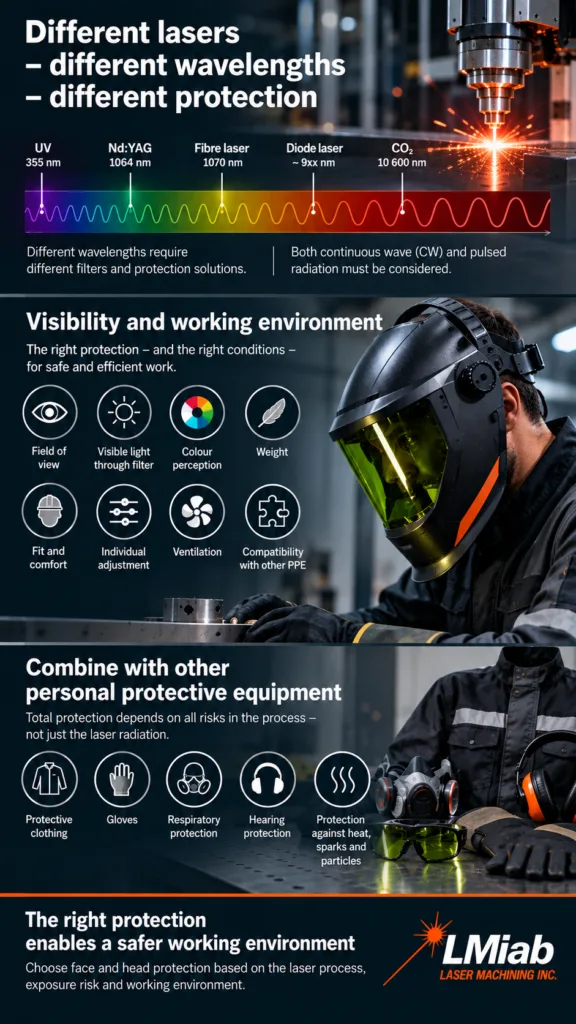
The protection must be suitable for the wavelength of the laser and the potential exposure.
Fibre lasers, Nd:YAG lasers, diode lasers, CO₂ lasers and other laser systems operate at different wavelength ranges and may therefore require different filters and protective solutions.
The operating characteristics of the laser – including continuous-wave or pulsed operation – also need to be considered when selecting protection.
Visibility and working conditions
Effective face and head protection must not only provide the required level of protection. The operator also needs to be able to perform the work safely.
Relevant factors may include:
- field of view
- visible light transmission
- colour perception
- weight
- fit
- individual adjustment
- ventilation
- compatibility with other PPE.
Protection that is uncomfortable or severely restricts visibility can affect how the work is performed. Both protection and usability therefore need to be considered.
Combining protection with other PPE
Depending on the laser process, face and head protection may need to be combined with other personal protective equipment.
This may include:
- protective clothing
- gloves
- respiratory protection
- hearing protection
- additional protection against heat, sparks or particles.
The required equipment is determined by the combined hazards associated with the process – not solely by the laser radiation itself.
Personal protection is the last line of defence
Face and head protection is personal protective equipment and should not replace engineering safety controls.
Hazards should primarily be reduced through measures such as:
- protective enclosures
- interlock systems
- laser safety curtains and other barriers
- laser safety windows
- controlled working areas
- appropriate working procedures.
PPE provides an additional level of protection where the risk assessment indicates that exposure may still occur.ma.
Standards and risk assessment
Personal protective equipment should be selected based on a risk assessment of the specific laser installation and task.
The EN/IEC 60825 series is central to laser safety. Relevant standards for laser eye protection also include EN 207 and, where applicable, EN 208.
Additional requirements and standards may apply to welding helmets and combined protective equipment depending on their design and intended use.
The specific product and application should therefore always be considered when selecting suitable protection.
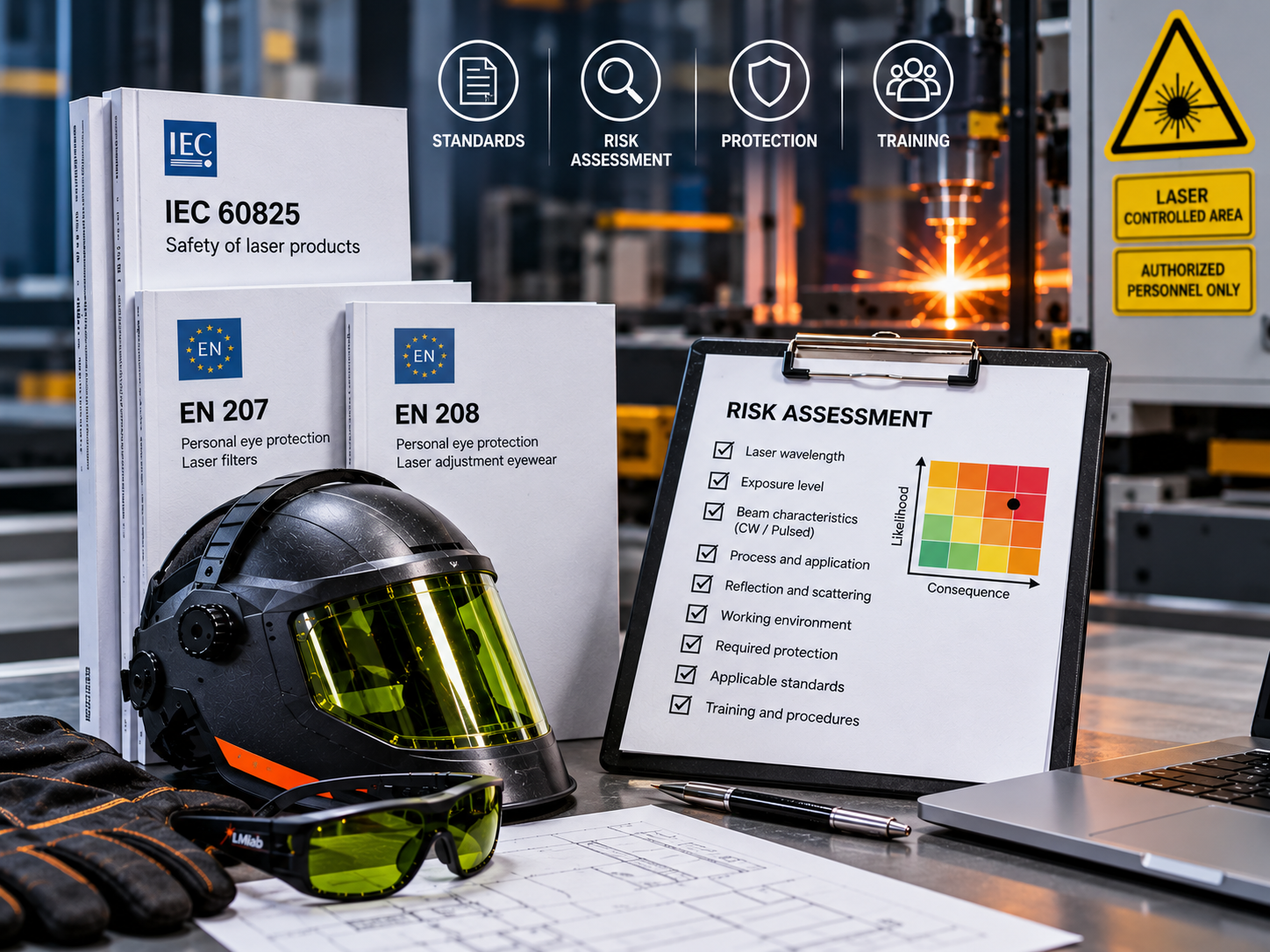

Face and head protection from LMI AB
LMI AB offers personal protective equipment for different laser processes and industrial environments.
We can help assess suitable protection based on factors such as laser process, wavelength, exposure risk, working method and the need for additional face and head protection.
Need help selecting the right protection?
The choice of welding helmet, face shield or other face and head protection should be based on the actual laser process and risk assessment.
Urban Gärds
Contact person for laser safety
Urban helps you identify suitable face and head protection for your laser process and working environment.