

Laser Safety Blinds
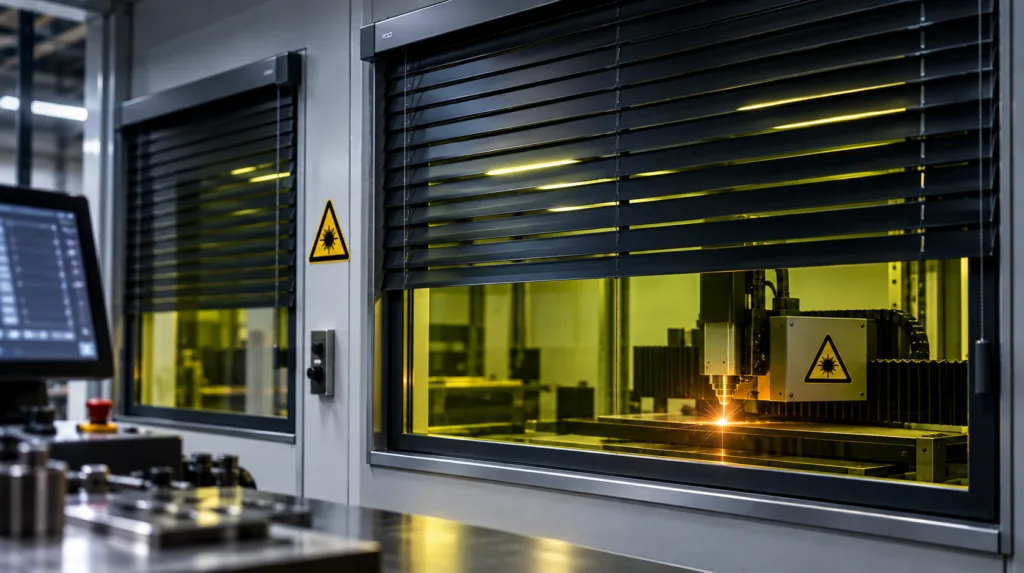
Laser safety blinds provide a flexible protective barrier for windows and glazed areas in laser-controlled environments. They allow daylight and visual contact between different areas to be retained when the protection is open, while the window can be screened when the laser process requires protection.
They can be used in laboratories, production areas, laser-controlled rooms and other environments where existing windows need to form part of the overall laser safety solution.
What is a laser safety blind?
A laser safety blind is a movable protective barrier installed in front of a window or glazed area.
When lowered or closed, the blind creates a barrier between the laser-controlled area and its surroundings. When the laser process presents no hazard, the blind can be opened and the window can return to normal use.
This makes laser safety blinds particularly useful where laser protection, flexibility and visual contact are all required.
When are laser safety blinds used?
Laser safety blinds can be a suitable solution where existing windows need protection without permanently covering or replacing them.
Typical applications include:
- laser-controlled rooms
- laboratories and development environments
- production facilities
- windows between laser-controlled and general working areas
- control rooms and operator areas
- training and demonstration environments.
They can also be used together with other protective measures such as enclosures, laser safety curtains, laser safety windows and interlock systems.
A flexible barrier for existing windows
One of the main advantages of a laser safety blind is that the existing glazed area can remain in place.
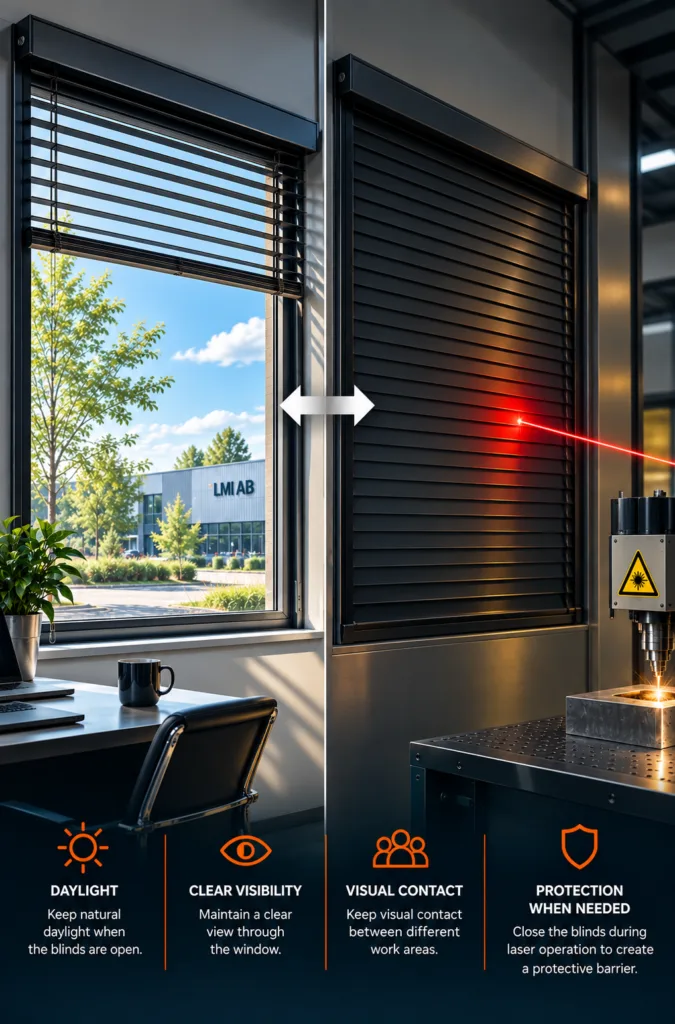
When the laser-controlled area is not in use, the blind can remain open to provide:
- daylight
- normal visibility through the window
- visual contact between working areas.
When the laser process is operating, the blind can be closed to provide a protective barrier.
This offers greater flexibility than permanently covering an existing window.
Protection must be matched to the laser
Like other laser barriers, a laser safety blind must be selected according to the specific laser installation.
Important factors include:
- laser wavelength
- output power
- continuous-wave or pulsed operation
- possible power density at the blind
- distance between the laser process and the window
- possible direct and reflected beam paths
- exposure time.
It is therefore not sufficient for a blind simply to be described as providing laser protection. It must be suitable for the exposure conditions that may occur in the particular installation.
The blind forms part of the protective barrier
When a laser safety blind is installed in front of a window, it becomes part of the overall protective barrier of the room or installation.
The surrounding installation therefore also needs to be considered.
This includes factors such as:
- width and height of the blind
- overlap around the window opening
- side guides
- mounting points
- openings and gaps
- position relative to potential laser beam paths.
The objective is to prevent hazardous laser radiation from passing around the protective barrier through gaps or unprotected parts of the glazed area.et.
Manual or motorised operation
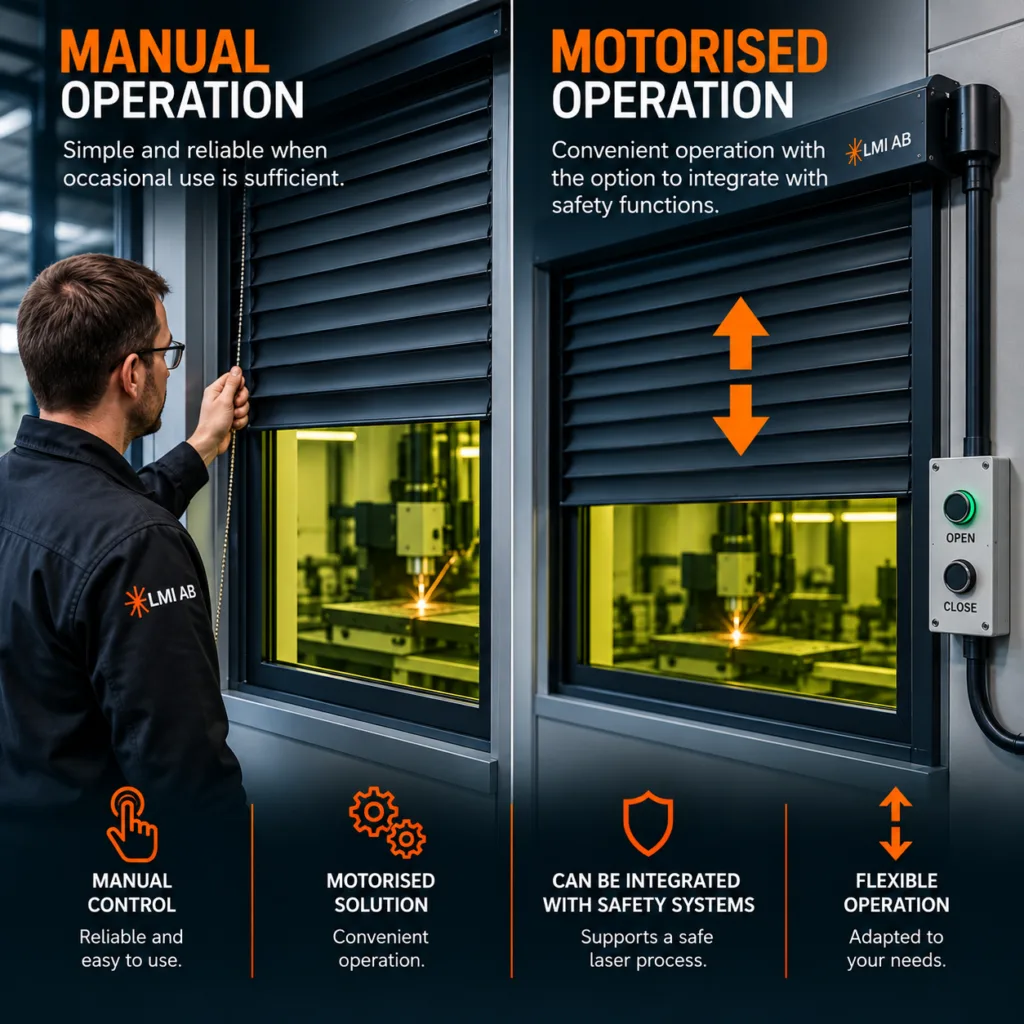
Laser safety blinds can be operated in different ways depending on the installation.
A manual system may be suitable where the blind only needs to be opened or closed occasionally.
For installations where the protection is used frequently, a motorised system can provide more convenient operation.
Depending on the design and risk assessment, motorisation may also allow the blind to be integrated with other control and safety functions.
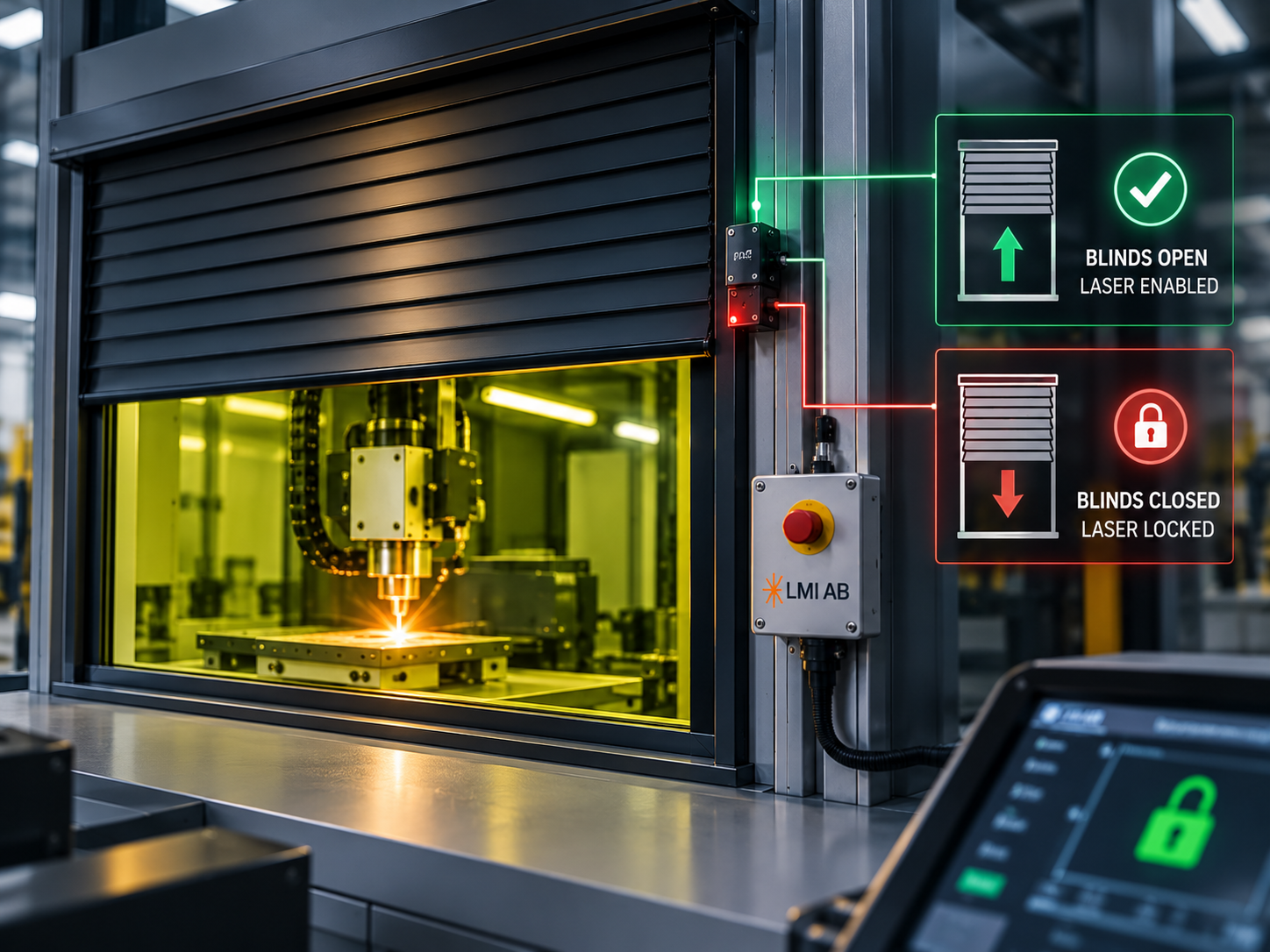
Laser safety blinds and interlock systems
In some installations, the position of the blind may need to form part of the safety system.
An interlock system can, for example, be used to ensure that laser operation is only permitted when the intended protective barrier is in the correct position.
This can be particularly relevant in automated or motorised installations where the laser safety blind forms an active part of the access and safety control system.
Several safety functions can then work together rather than relying solely on an operator to manually verify each protective measure.
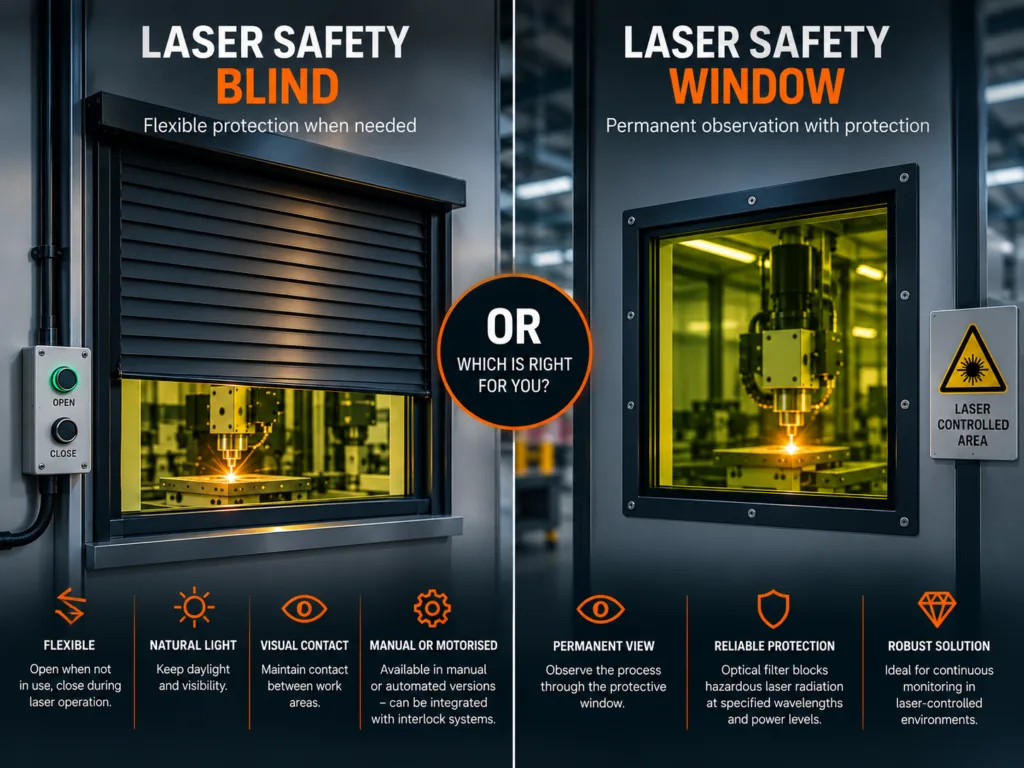
Laser safety blind or laser safety window?
Both solutions can be used to manage windows within laser-controlled environments, but they serve different purposes.
A laser safety window is a permanent optical filter that allows the process to be observed through the protective barrier.
A laser safety blind is an openable barrier that covers an ordinary or existing window when the laser process requires protection.
The most appropriate solution depends on how the area is used, the requirement for visibility and the design of the laser process.
Some installations may also use a combination of different protective solutions.
Positioning and installation
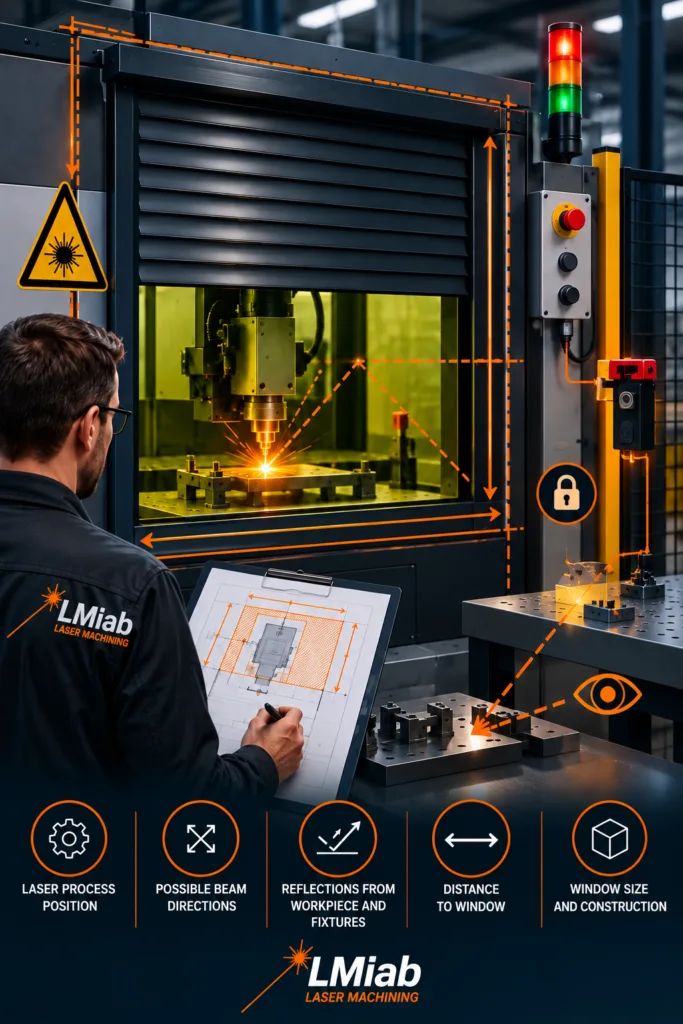
The laser safety blind needs to cover the area where hazardous laser radiation could reach the window.
Its position should therefore be considered together with:
- location of the laser process
- possible beam directions
- reflections from workpieces and fixtures
- distance from the process to the window
- size and construction of the glazed area.
A correctly installed blind should function as a continuous part of the protective structure surrounding the laser-controlled area.
Risk assessment and laser safety
The required protective solution should always be based on a risk assessment of the specific laser installation.
Laser safety blinds should therefore be considered together with measures such as:
- protective enclosures
- laser safety curtains
- laser safety windows
- interlock systems
- warning systems
- personal protective equipment
- procedures and training.
The objective is to create multiple coordinated protective measures that reduce the risk of exposure to hazardous laser radiation.g.

Laser safety blinds from LMI AB
LMI AB offers laser safety blinds for industrial laser installations, laboratories and other environments where windows and glazed areas need to be screened.
The solution can be adapted according to factors such as window dimensions, laser parameters, installation position and the requirement for manual or automated operation.
Need help selecting the right laser safety blind?
The appropriate solution depends on the laser, the position of the window and how the laser-controlled area is used.Contact LMI AB and we will help you identify a laser safety blind suited to your installation.
Urban Gärds
Contact person for laser safety blinds
Urban helps you select the right laser safety blind for your laser installation.