

Laser Optics for CO₂ Lasers
Laser optics for CO₂ lasers include a wide range of optical components used to generate, direct, shape, polarise and focus the laser beam. Unlike fiber lasers, where the laser beam is often delivered through an optical fiber to the processing head, a CO₂ laser beam is normally guided through an optical beam path using mirrors before reaching the focusing optics.
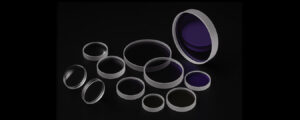
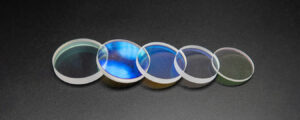
LMI AB supplies a comprehensive range of CO₂ laser optics for industrial laser systems, including focusing lenses, protective windows, beam delivery mirrors, resonator mirrors, phase-shifting mirrors and other specialised optical components.
We can also help identify the correct optics based on machine manufacturer, machine model, part number, dimensions and the existing component.
Optics for CO₂ Laser Wavelengths
Industrial CO₂ lasers typically operate in the long-wave infrared range, with 10.6 µm being the most common wavelength. This places very different requirements on optical materials and coatings compared with, for example, fiber and Nd:YAG lasers, which operate around 1 µm.
Materials that are transparent to visible light are not necessarily transparent at CO₂ laser wavelengths. Special infrared optical materials and reflective components designed for CO₂ laser systems are therefore required.
The correct material, surface quality and coating are essential for high transmission or reflectivity, low absorption and stable operation at high laser powers.
Optical Components in a CO₂ Laser System
The optical beam path may contain a large number of components depending on the laser type, machine design and application.
Common optical components include:
- focusing lenses
- protective windows and cover glasses
- beam delivery and folding mirrors
- total reflectors
- zero phase shift mirrors
- phase retarding mirrors
- resonator mirrors
- rear reflectors
- output couplers
- collimating and telescope optics
- adaptive mirrors and beam optimiser optics
- parabolic and other shaped mirrors
The components used and their specifications vary between different laser systems.
Focusing Lenses for CO₂ Lasers
The focusing lens concentrates the laser beam at the point where laser processing takes place. The focal length, diameter, material and coating of the lens affect the beam focus and therefore the characteristics of the process.
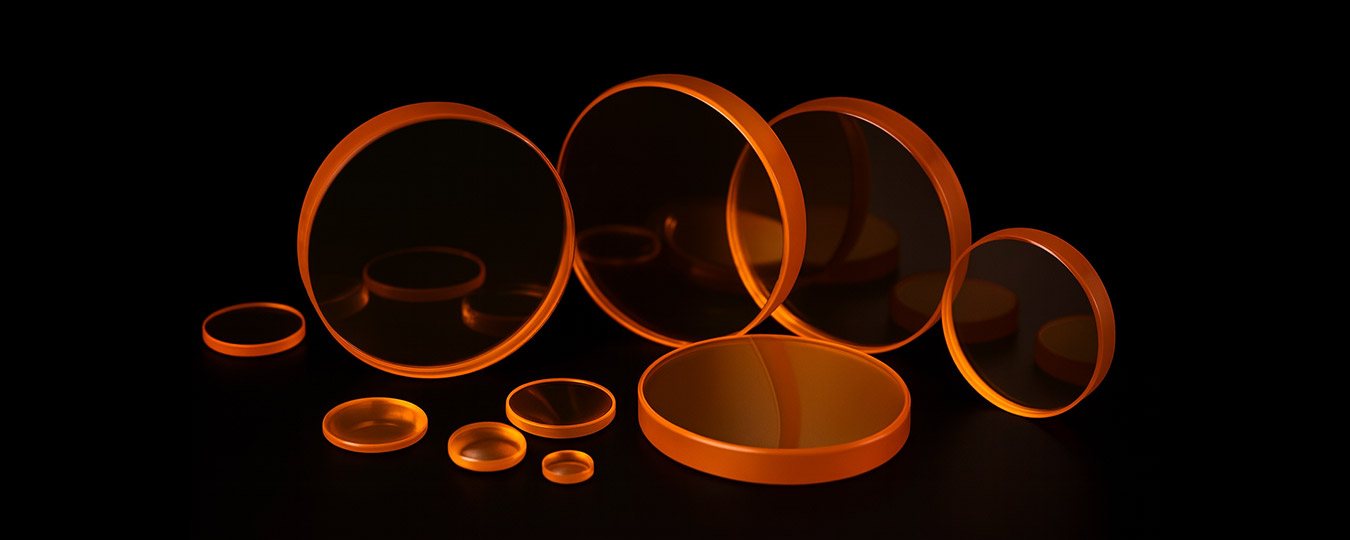
In industrial CO₂ laser systems, zinc selenide, ZnSe, has traditionally been a common material for transmissive focusing optics due to its good transmission at 10.6 µm.
Focusing lenses are available in different diameters and focal lengths depending on the machine, laser head and application. The correct lens must always be selected according to the specific optical system.
From Raw Material to Finished ZnSe Optics
Zinc selenide, ZnSe, for high-performance CO₂ laser optics is normally produced using CVD – Chemical Vapor Deposition. During this process, the material is gradually deposited under carefully controlled conditions. The result is a highly pure and homogeneous polycrystalline ZnSe material with very low absorption at CO₂ laser wavelengths.
After the CVD process, the larger ZnSe material is processed into optical blanks. These are cut or core-drilled to the required dimensions and then precision-ground and polished to produce components such as flat windows or lenses with individually specified diameter, thickness, radius and focal length.
The finished optical component is finally provided with a coating matched to its intended function. For a focusing lens, this will typically be an anti-reflection coating designed to minimise reflection losses at the operating wavelength of the CO₂ laser.
Material quality is particularly important in high-power laser systems. Even very small amounts of absorption or material imperfections can cause heating and thermal lensing, potentially affecting the focal position, beam quality and stability of the laser process.
Protective Windows for CO₂ Lasers
In systems where protective windows are used, they provide a barrier between the process environment and more expensive optical components. They can protect the optics against spatter, particles, fumes and other contamination generated by the laser process.
A contaminated or damaged protective window can absorb laser energy and cause localised heating. This can affect beam quality and process results and, in the worst case, cause damage to optical components further inside the system.
Protective windows are therefore often consumable components that should be inspected regularly and replaced when required.
Mirrors for CO₂ Lasers
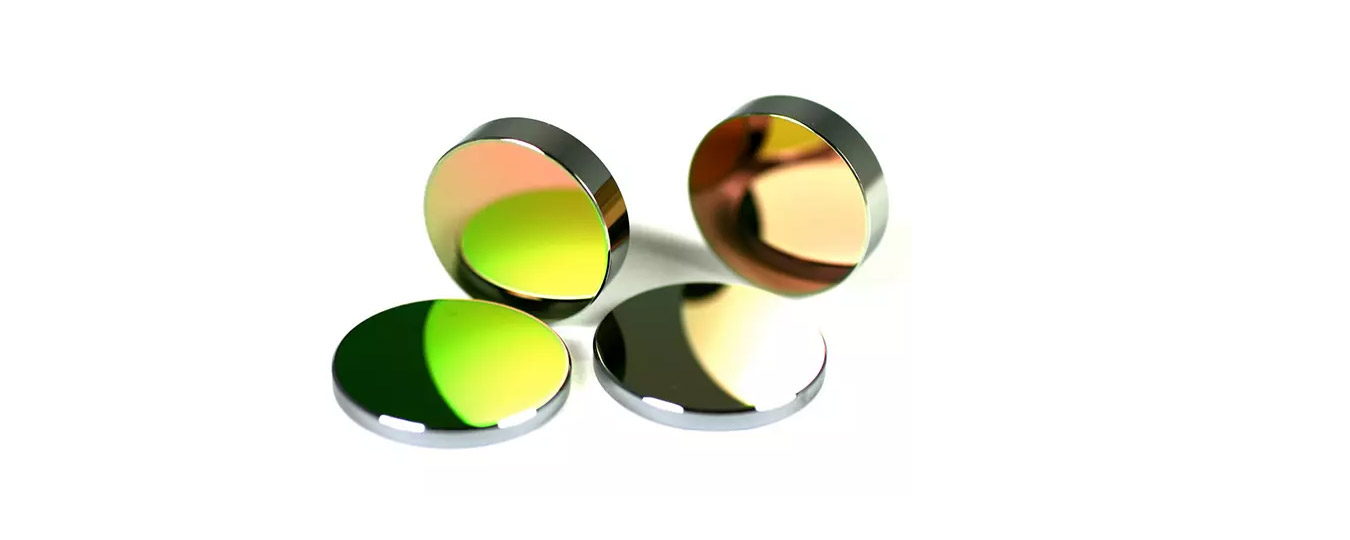
Mirrors are central components in many CO₂ laser systems. They are used both inside the laser resonator and to deliver the laser beam from the laser source to the processing area.
Different mirrors can perform completely different functions even when their dimensions and appearance are very similar. The substrate, surface geometry and coating must therefore correspond to the function of the mirror within the system.
Beam Delivery and Folding Mirrors
Beam delivery mirrors are used to change the direction of the laser beam through the machine’s optical beam path. In moving optical systems, several mirrors may work together to deliver the beam from the laser source to the processing head.
High reflectivity and low absorption are particularly important, as every mirror can otherwise contribute to power losses and heat generation.
Total Reflectors
Total reflectors are designed to provide very high reflectivity at the operating wavelength of the CO₂ laser. Depending on the system design, they may be used both in resonators and in external beam delivery systems.
The coating is optimised for the specific wavelength, angle of incidence and function of the mirror.
Zero Phase Shift Mirrors
Zero phase shift mirrors are designed to reflect the laser beam with minimal change to its state of polarisation. They are therefore used in beam delivery systems where the polarisation of the laser beam needs to be maintained through multiple reflections.
This is particularly important in CO₂ laser systems where polarisation can affect the laser process.
Phase Retarding Mirrors
Phase retarding mirrors, also known as phase retarders or phase shift mirrors, are used to control the polarisation of the laser beam.
A common version is a quarter-wave phase retarding mirror that creates approximately 90° of relative phase shift between the polarisation components. With the correct orientation, a linearly polarised CO₂ laser beam can thereby be converted into circular polarisation.
Circular polarisation has traditionally been important in CO₂ laser cutting because the cutting result can otherwise vary depending on the cutting direction.
Resonator Mirrors
Inside the laser resonator itself, specialised optical components are used to generate and control the laser radiation.
Depending on the laser design, these may include:
- high-reflectivity rear mirrors
- folding mirrors
- total reflectors
- output couplers
- phase-locking optics
- other resonator-specific optical components
Resonator optics are highly system-specific and should always be replaced with components having the correct optical and mechanical specifications.
Output Couplers
The output coupler is part of the laser resonator and is used to couple a controlled proportion of the laser energy out of the resonator.
Unlike a total reflector, the component is therefore designed to provide a defined combination of transmission and reflection. Its specification is directly related to the design of the laser resonator.
Mirror Substrates – Copper, Silicon and Molybdenum
CO₂ laser mirrors are manufactured using several different substrate materials. The choice depends on the function of the mirror, laser power, cooling requirements and the environment in which the component is used.
Copper – Cu
Copper has excellent thermal conductivity and is therefore frequently used as a mirror substrate in high-power systems. Copper mirrors can also be water-cooled to efficiently remove absorbed heat.
Silicon – Si
Silicon is widely used as a substrate for precision mirrors in CO₂ laser systems. The material is well suited to precision optical processing and is used with several different types of high-reflectivity and polarisation-controlling coatings.
Molybdenum – Mo
Molybdenum is a hard and temperature-resistant material used in certain CO₂ laser optical applications where high resistance to spatter and mechanical damage is important.
Molybdenum mirrors have different reflection and absorption characteristics compared with high-reflectivity dielectric-coated mirrors and are therefore selected for specific applications.
Coatings for CO₂ Laser Optics
The coating is a critical part of the performance of a CO₂ laser optical component. Different coatings are used to optimise reflectivity, transmission, absorption, polarisation characteristics and durability.
Common coating principles and types include:
- high-reflectivity dielectric coatings
- zero phase shift coatings
- 90° phase shift / phase retarder coatings
- gold and enhanced gold coatings
- molybdenum surfaces and molybdenum-based solutions
- resonator-specific coatings
- dual-band coatings
- other machine- and application-specific coatings
High reflectivity is not the only important property. In high-power systems, extremely low absorption is also essential because absorbed laser energy is converted into heat within the optical component.
Gold and Enhanced Gold
Gold has high reflectivity in the infrared range and is therefore used on certain CO₂ laser mirrors. Enhanced gold combines a metallic gold coating with additional optical layers to improve properties such as reflectivity or durability for the intended application.
Dual-Band Coatings
Some systems use coatings optimised for both the infrared radiation of the CO₂ laser and a visible pilot or alignment laser. This allows both wavelengths to be handled by the same optical beam path.
TRZ, MMR and Other Optical Designations
A wide variety of product, surface and coating designations are used for CO₂ laser optics. Examples that may appear in spare parts catalogues or on existing components include TRZ, MMR, M, CX, CXCX, PO and other manufacturer- or system-specific designations.
These designations should not be used in isolation to determine whether two components are interchangeable. Their meaning may be associated with a particular manufacturer, product series, surface geometry, coating or optical function.
When replacing such optics, the complete specification, part number and relevant machine model should therefore always be verified.
Flat, Concave and Convex Optics
CO₂ laser mirrors are not necessarily flat. Depending on their function in the optical beam path, optical surfaces may be flat, concave, convex, spherical or parabolic.
Shaped mirrors can, for example, be used to:
- collimate the laser beam
- expand or reduce the beam diameter
- control beam divergence
- focus the laser beam
- optimise beam characteristics through the optical beam path
The radius, surface geometry and orientation are therefore just as important as the diameter and coating of the mirror.
Radial Grinding and Mechanical Design
In addition to their optically active surfaces, CO₂ laser optical components may have specific mechanical features designed to fit the machine’s optical mounts and mounting system.
These may include radially machined or ground outer edges, defined radii, chamfers, mounting surfaces or other geometric features.
Even small mechanical differences may mean that an optically equivalent component does not fit correctly in the machine. Both the optical and mechanical specifications therefore need to be verified when identifying replacement optics.
Correct Optics Are Critical at High Laser Powers
In a CO₂ laser system, the laser beam may pass through or be reflected by several optical components before reaching the workpiece. Small losses in each component can therefore have a significant cumulative effect.
Contamination, damaged coatings or incorrectly specified optics can cause:
- power losses
- localised heating
- reduced beam quality
- changes in polarisation
- an unstable laser process
- reduced service life of optical components
- secondary damage to other parts of the laser system
It is therefore important to use optics with the correct specifications and to inspect the beam delivery system and optical components regularly.
Cleaning and Handling of CO₂ Laser Optics
CO₂ laser optics must be handled with great care. Dust, particles, grease and other contamination can increase absorption and cause localised heating when the optics are exposed to laser radiation.
The cleaning method must be appropriate for the material and coating of the component. Only cleaning products and methods approved for the specific optics should be used, and the recommendations of the optics or machine manufacturer should always be followed.
Optical surfaces should not be touched with bare fingers, and components should be handled in an environment that is as clean and dust-free as possible.
A damaged optical coating cannot normally be restored by cleaning. The component should then be replaced.
Can’t Find the CO₂ Laser Optics You Need?
CO₂ laser systems have been used industrially for many years, resulting in a very large number of machines, laser models and optical components on the market. Not all variants available from LMI AB are therefore presented on our website.
If you are looking for a specific lens, mirror or other optical component, please provide as much information as possible, for example:
- machine manufacturer and model
- laser manufacturer and laser model
- part number or markings on the optics
- type of optical component
- diameter or other dimensions
- thickness
- surface geometry or radius, if known
- coating designation, such as TRZ, MMR or other markings
- photograph of the component and any packaging or label
With the correct information, LMI AB can help identify suitable optics, including components for older CO₂ laser systems.
Laser Optics for Different CO₂ Laser Machines
LMI AB supplies CO₂ laser optics for a wide range of industrial laser machines and laser systems. Our range includes both commonly used consumable optics and more specialised optical components.
As specifications vary between different machines and generations, we recommend providing the part number or machine details when making an enquiry.
Contact LMI AB about CO₂ Laser Optics
Do you need focusing lenses, protective windows, mirrors, resonator optics or other optical components for a CO₂ laser?
Contact LMI AB with information about the machine and the optics currently in use. We will help you identify the correct component and provide information about pricing and availability.