

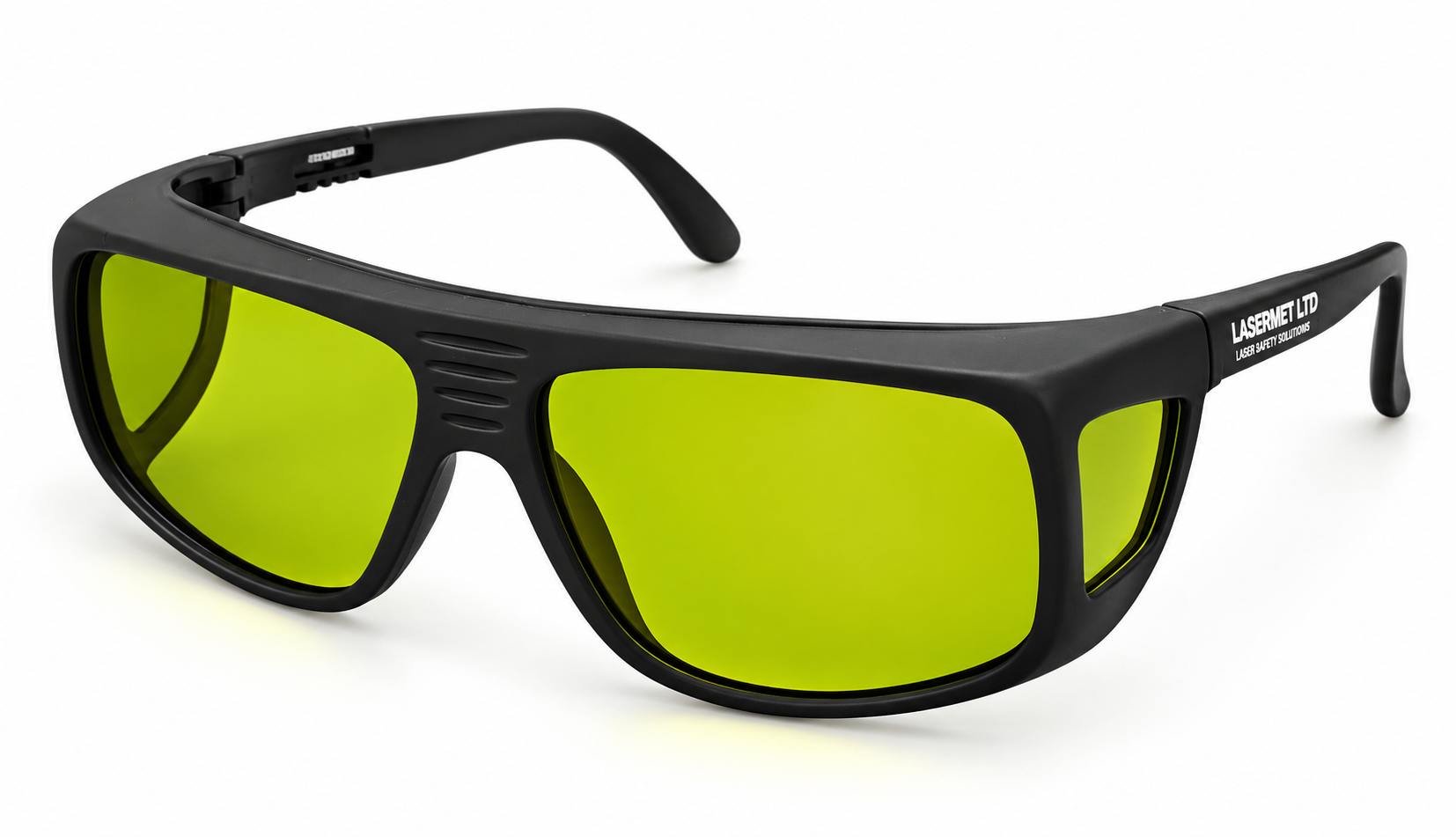
Lasermet LM Series – Polycarbonate Laser Safety Eyewear
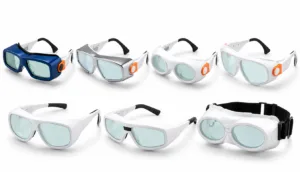
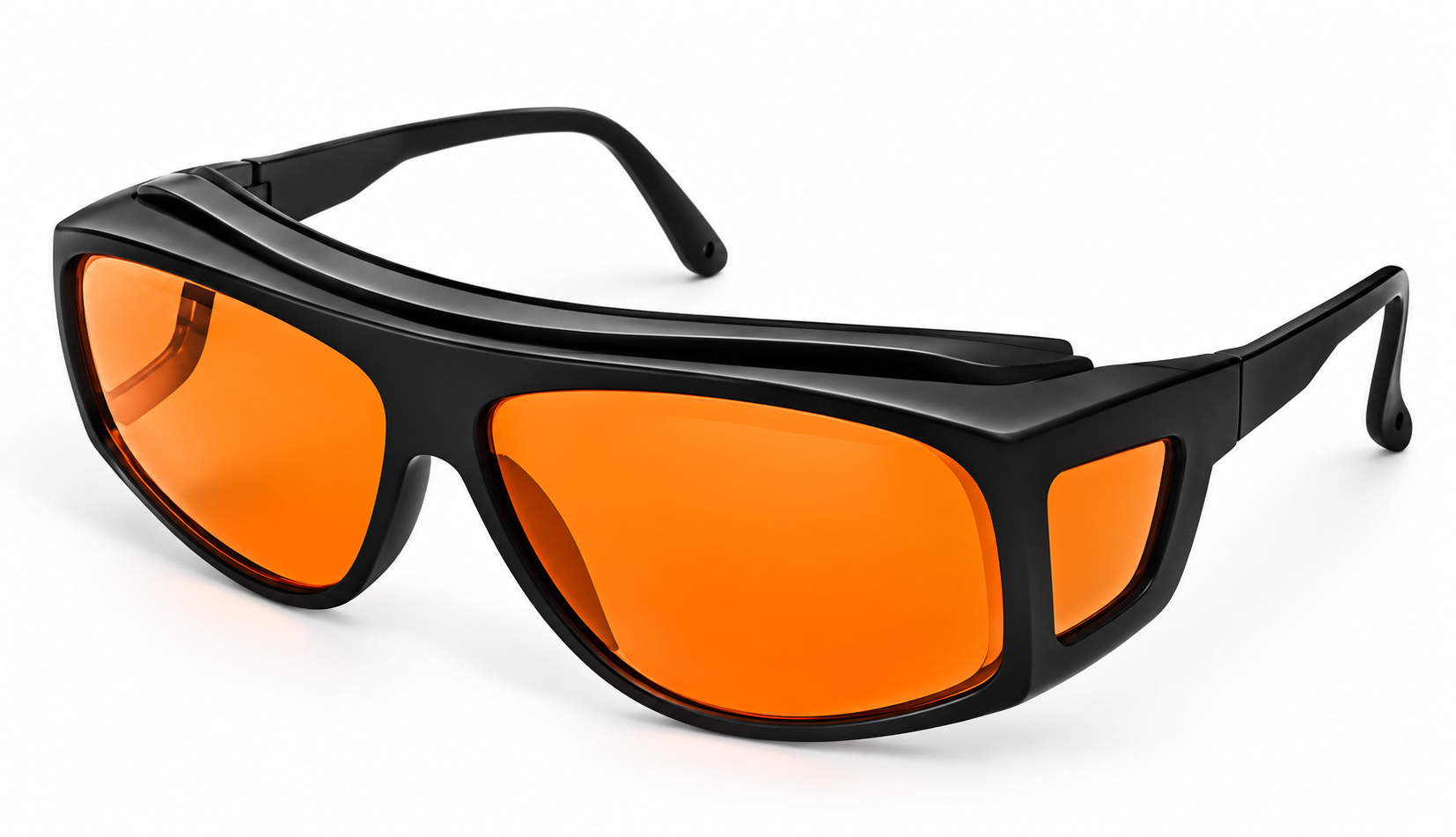
Lasermet LM Series is a range of lightweight laser safety eyewear with polycarbonate filters for professional and industrial laser applications. The series provides protection across a broad range of laser types and wavelengths, combining low weight with good optical performance and a comfortable fit.
The polycarbonate filters are available in several versions with different wavelength ranges, optical density (OD), colours and visible light transmission. This makes it possible to select laser safety eyewear according to the specific laser and application.
Lightweight Laser Safety Eyewear for Professional Use
Polycarbonate is a lightweight and durable material that is well suited to laser safety eyewear used for extended periods. The LM Series is designed to combine laser protection with good visibility and low weight.
The series can be used in applications including industrial laser processes, research, laboratory environments and medical laser applications, provided that the correct filter is selected for the specific laser.
Filters for Different Laser Types and Wavelengths
The LM Series includes a wide range of filter options for different laser types and wavelength ranges. Lasermet’s filter range includes options for:
- Nd:YAG lasers
- YAG lasers and harmonic wavelengths
- diode lasers
- Alexandrite lasers
- HeNe and ruby lasers
- dye lasers
- therapy lasers
- telecommunications and broadband applications
The different filters vary in wavelength range, optical density (OD), visible light transmission (VLT) and colour. VLT varies between filter types and determines how much visible light passes through the eyewear.
Examples of Filter Options
Lasermet offers several filter options within the LM Series. Examples include:
- LM-11 – filter for Nd:YAG lasers with high visible light transmission.
- LM-12 – broadband protection for YAG applications.
- LM-6 – for YAG lasers and harmonic wavelengths.
- LM-14 – for YAG harmonic wavelengths and diode lasers.
- LM-3 – for Alexandrite and diode lasers.
- LM-20 – for applications including HeNe, ruby and red diode lasers.
- LM-40 – for telecommunications and broadband applications across a broad wavelength range.
Filters are also available for applications including dye lasers, therapy lasers and laser alignment.
Optical Density and Visible Light Transmission
The required optical density depends on the laser wavelength and potential exposure. The different filters in the LM Series therefore provide different OD levels within their specified wavelength ranges.
Visible light transmission also varies between filters. For example, LM-11 has a VLT of 59%, while other filters provide lower light transmission where higher or broader spectral protection is required.
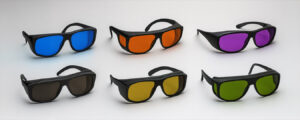
Filter colour therefore also varies between versions and may include green, light green, brown, light brown, blue-green, pink, violet or light blue depending on the filter type.
The Correct Filter for the Laser
Laser safety eyewear is not universal. The fact that two laser systems use the same general type of laser does not automatically mean that the same protective eyewear can be used.
When selecting laser safety eyewear, factors that need to be considered include:
- laser wavelength or wavelength range
- laser class and output power
- CW or pulsed laser operation
- pulse energy and pulse duration
- required optical density and protection level
- visible light transmission and viewing conditions
- working environment and duration of use
Laser safety eyewear is personal protective equipment and should be used as part of a complete laser safety solution. It does not replace engineering controls such as laser safety enclosures, laser safety curtains, safety windows and interlock systems.
Contact LMI AB for the Correct Laser Safety Eyewear
LMI AB helps you select the appropriate laser safety eyewear and filter from the Lasermet LM Series based on laser type, wavelength, power, process and working environment.
Contact us with information about your laser and application and we will help you identify a suitable filter and the required protection level.