

Laser Brazing
Laser brazing is a precision joining process for metallic materials in which laser energy is used to melt a filler material that joins the components – without normally melting the base material.
The controlled and localised heat input makes the process particularly suitable for applications where high demands are placed on joint quality, surface finish, dimensional accuracy and low thermal impact.
Here we explain how laser brazing works, which materials and applications it is suitable for, and the factors that influence the result of an industrial laser brazing process.
What is laser brazing?
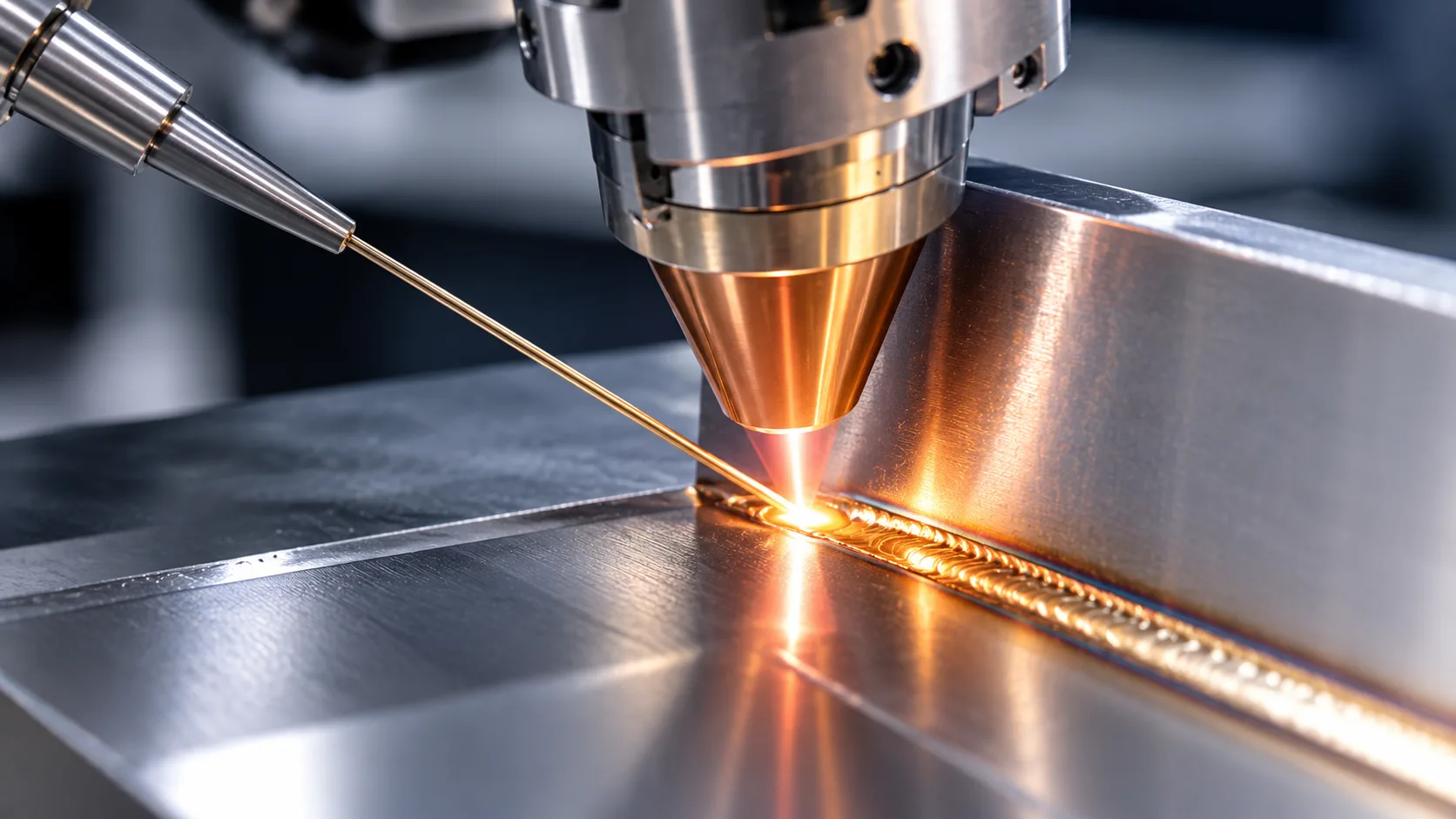
Laser brazing is a joining process in which a concentrated laser beam is used as the heat source to melt a filler material. The molten filler material wets the surfaces of the base materials and flows into the joint, where it solidifies and joins the components together.
Unlike laser welding, the base material does not normally need to be melted. The process can therefore result in lower thermal impact on the components and reduce the risk of distortion.
The high precision of the laser beam also makes it possible to concentrate the heat input within a very limited area.
Laser brazing is therefore particularly suitable for components where requirements include:
- high dimensional accuracy
- limited heat input
- low distortion
- high and consistent joint quality
- leak-tight joints
- good surface finish
- high repeatability.


How does laser brazing work?
During laser brazing, the laser beam is focused on the area where the components are to be joined. Filler material is normally supplied as wire or powder and heated by the laser energy until it melts.
The molten filler material wets the surfaces of the components and flows into the joint. As the laser beam and filler material move along the joint, the filler solidifies and forms the connection between the components.
For a stable process, the temperature must be high enough to melt the filler material and provide good wetting, while remaining controlled so that unnecessary melting of the base material is avoided.
The process result is influenced by factors including:
- laser power
- process speed
- focal position and beam diameter
- filler material
- wire or powder feed rate
- material combination
- joint geometry
- surface condition of the components
- fixturing
- shielding gas, where applicable.
It is the interaction between these factors that determines joint quality and process stability.pelet mellan dessa faktorer som avgör fogens kvalitet och processens stabilitet.
Laser brazing compared with laser welding
Laser brazing and laser welding both use laser radiation as a concentrated heat source, but the joining principles are different.
In laser welding, the base materials are locally melted to form the weld joint. The process can be performed with or without filler material.
In laser brazing, a filler material with a lower melting temperature than the base material is melted instead. The base material therefore does not normally need to melt for the components to be joined.
| Property | Laser brazing | Laser welding |
| Base material | Normally does not need to melt | Locally melted |
| Filler material | Required | Not always required |
| Heat input | Highly controlled | Concentrated but usually higher |
| Distortion | Generally low | Generally low compared with conventional welding |
| Joint appearance | Very good surface finish possible | Depends on process and joint |
| Penetration depth | Limited | Can be deep |
| Typical use | Joints requiring good finish and low thermal impact | Structural and technical welded joints |
The most suitable process therefore depends on the component, materials and the mechanical, thermal and aesthetic requirements of the joint.
Advantages of industrial laser brazing
Controlled heat input
The laser beam makes it possible to concentrate energy within a limited area and control the process with high precision.
Low distortion
Because the base material does not normally need to be melted, the total thermal impact can be limited. This is particularly valuable for thin or dimensionally sensitive components.
High joint quality
With the correct materials, joint design and process parameters, laser brazing can produce consistent, leak-tight and repeatable joints.
Good surface finish
The process can produce smooth and aesthetically attractive joints, potentially reducing the need for subsequent finishing.
High repeatability
Laser energy, movement and filler material feed can be controlled very precisely, making the process well suited to automated series production.
Excellent potential for automation Laser brazing can be integrated with multi-axis motion systems, robots, component handling and other production equipment.

Typical applications
Laser brazing is used in industrial applications where high joint quality needs to be combined with controlled heat input and high repeatability.
Typical applications include:
- automotive manufacturing
- aerospace
- energy industry
- marine and offshore
- mechanical engineering and manufacturing
- precision components
- tools and wear components
- repair and restoration of technical components
- automated series production.
In the automotive industry, laser brazing is used in applications where joint appearance and dimensional accuracy are important, including visible body joints.gens utseende och dimensionsnoggrannhet är viktiga, exempelvis på synliga karossfogar.
Materials and filler materials
Laser brazing can be used with a range of metallic materials and material combinations.
Examples include:
- carbon steel
- stainless steel
- high-strength steels
- titanium alloys
- nickel-based alloys
- cobalt-based alloys
- certain carbide-based materials.
The filler material must be selected according to the base material and the required properties of the finished joint.
The choice can influence:
- wetting
- joint strength
- corrosion properties
- operating temperature
- wear resistance
- joint appearance
- the process temperature window.
The combination of base and filler materials should therefore be evaluated together as part of process development.
Joint design and component quality
A stable laser brazing process requires the components, filler material and joint geometry to work together.
The joint surfaces must allow good wetting and should be free from contaminants that could adversely affect the process.
Important factors include:
- joint geometry
- gap between the components
- component positioning
- surface condition
- oxides and contaminants
- fixturing
- positioning and feeding of the filler material.
Accurate and repeatable component positioning is particularly important in automated systems.m.
Wire or powder as filler material
Filler material can be supplied in different ways depending on the application.
Wire feeding
In wire-based laser brazing, the filler material is continuously fed into the process zone. The position and feed rate of the wire must be synchronised with the laser beam and movement along the joint.
The method is well suited to continuous and automated processes.
Powder feeding
Filler material can also be supplied in powder form. The powder is transported to the process area and melted by the laser beam.
The most suitable method depends on the component, material, joint geometry and type of process.
What affects the result of laser brazing?
A stable and repeatable result requires several process parameters to be balanced.
Important factors include:
- laser power
- process speed
- beam diameter and power density
- focal position
- filler material
- feed rate
- joint geometry and gap
- component positioning
- fixturing
- surface condition
- shielding gas
- required joint geometry.
Excessive heat input can affect the base material or impair the properties of the joint, while insufficient heat input can result in inadequate melting and wetting. The process window therefore needs to be established for the specific combination of component, base material and filler material.

Automation of laser brazing
Laser brazing is well suited to automation because the laser energy, movement and filler material feed can all be controlled with high precision.
An automated system can include:
- laser source
- process optics
- wire or powder feeder
- fixturing
- XY or multi-axis motion system
- industrial robot
- component handling
- cameras or sensors
- process monitoring
- control system
- laser safety enclosure.
The design of the system depends on component geometry, production volume, quality requirements and the required level of automation.
Safety in laser brazing
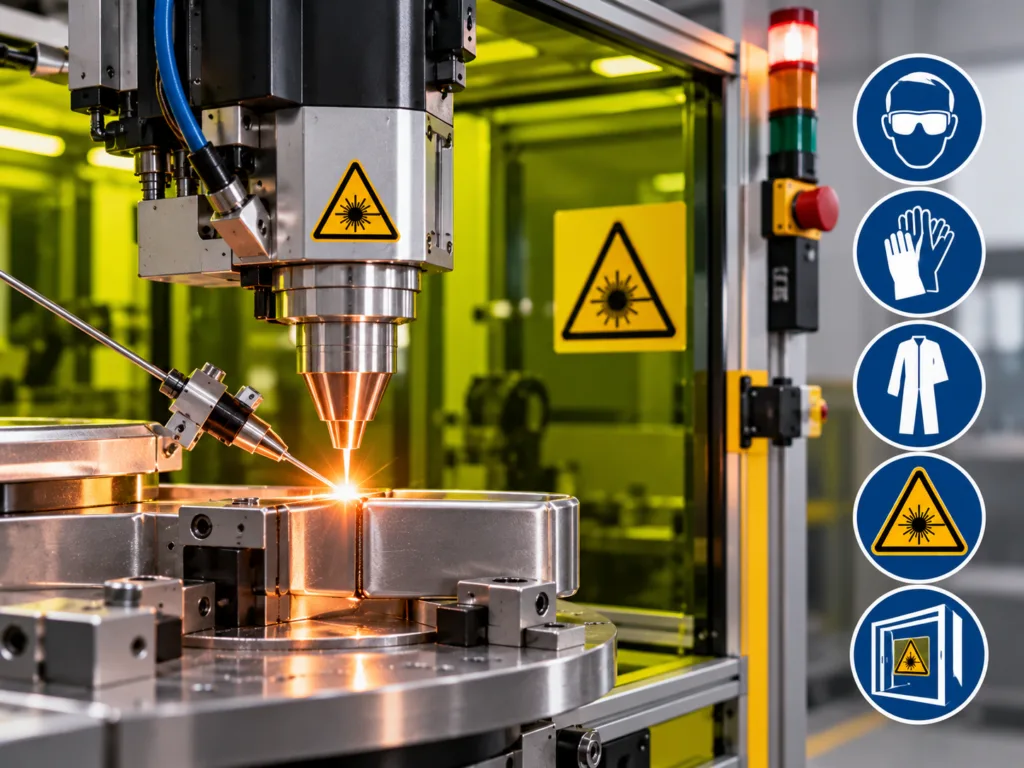
Industrial laser brazing uses high-power laser radiation and therefore requires a safety solution adapted to the specific laser and process.
Laser systems with an open beam path can present hazards from both direct and reflected laser radiation.
An automated installation can therefore include:
- laser safety enclosure
- interlocked doors and access panels
- laser-rated protective barriers
- extraction of fumes and particles
- documented operating procedures
- trained personnel
- application-specific risk assessment.
A correctly designed and enclosed system can be configured as Laser Class 1 during normal operation even when the process laser itself is Laser Class 4.
The right process starts with the application
In laser brazing, the result is determined by much more than the power of the laser or the technical specifications of the machine. Materials, filler material, joint design, component positioning, heat input and movement must work together to create a stable and repeatable process.
When developing a laser brazing process, requirements such as joint quality, strength, leak tightness, surface finish, dimensional accuracy, cycle time and repeatability therefore need to be considered together.
Testing and process development make it possible to evaluate the process parameters and equipment before the final system solution is specified.
Frequently asked questions about laser brazing
Laser brazing is a joining process in which a laser is used as the heat source to melt a filler material that joins the components. The base material does not normally need to be melted.
In laser welding, the base material is locally melted to form the weld joint. In laser brazing, a filler material with a lower melting temperature is melted instead, while the base material normally remains solid.
The process provides highly controlled heat input and can offer low distortion, high dimensional accuracy, good surface finish and high repeatability.
The process can be used with several types of steel as well as nickel-, cobalt- and titanium-based materials. Practical suitability depends on the combination of base material, filler material and the required properties of the finished joint.
Yes. Filler material is a fundamental part of the brazing process and has a lower melting temperature than the materials being joined.
Yes. The process is particularly suitable for automation and can be integrated with XY systems, multi-axis motion systems, industrial robots and automated component handling.Ja. Tillsatsmaterialet är en grundläggande del av lödprocessen och har en lägre smälttemperatur än de material som ska sammanfogas.
Yes, this is recommended. Testing makes it possible to evaluate the material combination, filler material, joint geometry, laser power, process speed and filler feed before the final system solution is determined.
Laser Brazing from LMI AB
LMI AB helps you evaluate the component, material, filler material, joint geometry and process requirements for industrial laser brazing.
We can also assist with system solutions where the laser source, process optics, filler material feeding, motion systems, automation, process monitoring and laser safety are tailored to the specific application.
Would you like to know whether laser brazing is suitable for your application? Contact LMI AB and we will help you evaluate the process and determine the technical requirements for a stable and repeatable solution.

Contact LMI AB about laser brazing
Are you planning to invest in laser brazing or would you like to investigate whether the technology could improve an existing joining process?
LMI AB can help you analyse materials, component geometry, joint design, filler material, quality requirements, production volume and automation requirements to develop a technically and economically suitable solution.
Contact Tim Smith for advice on laser brazing and laser brazing systems.
Tim Smith
CEO & Contact Person for Laser Brazing
Tim helps you select the right equipment and system solution for your brazing application.